
According to our Journey’s Kindergarten Curriculum, I am supposed to be teaching subject-verb agreement this week, however, we do not have any of the resources that go along with the plans, so I had to get a little creative!
I made my own little subject-verb agreement unit which includes posters, whole-group pocket chart activities, and independent practice worksheets and I used them with my class before sharing on TPT. The kids really seemed to get it by the end of the week & I had fun teaching because I love testing my own products with them and I love interactive learning!
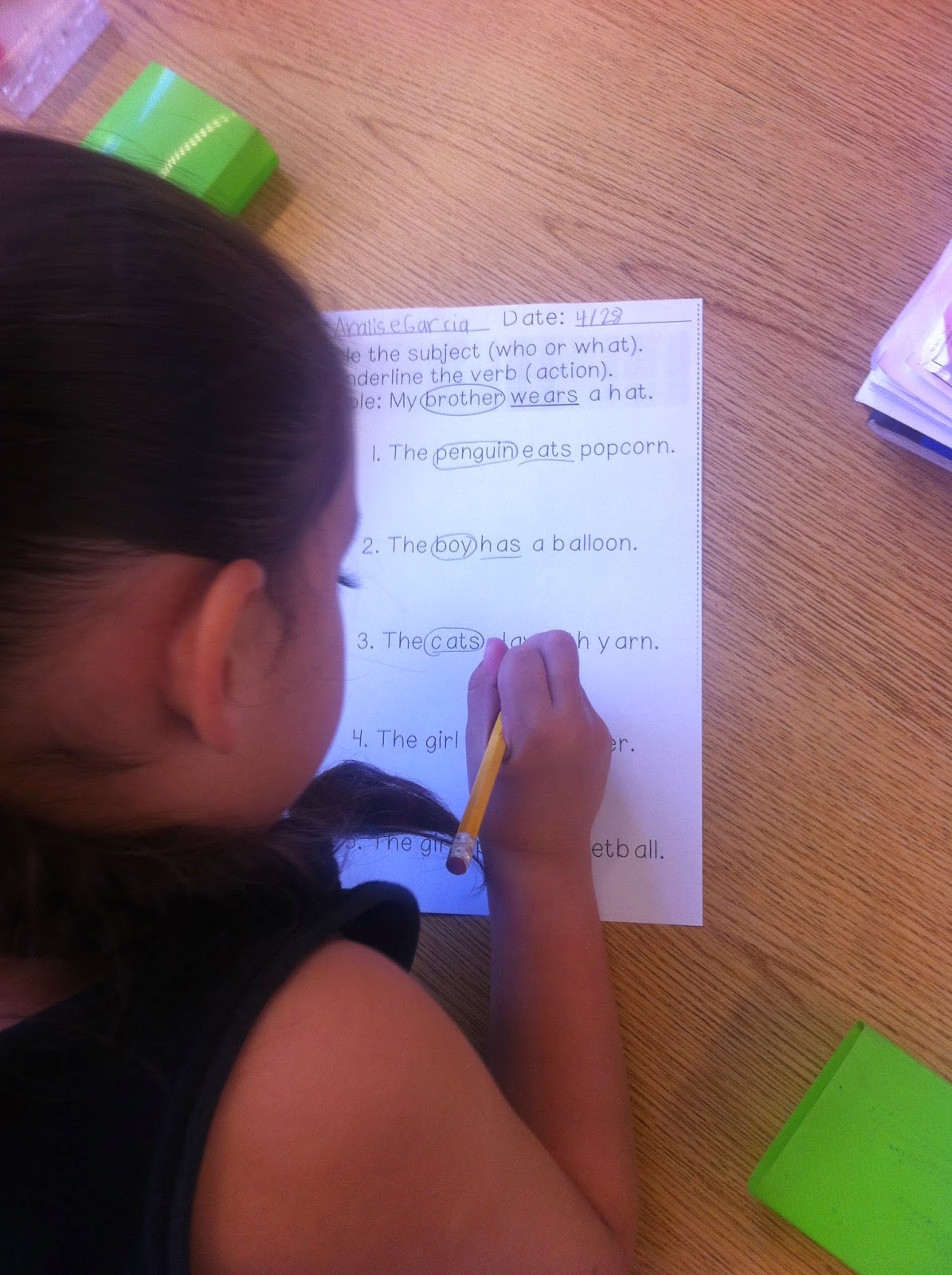
We started out with a lesson on what the subject and verb are in a sentence by looking at some posters from the unit and discussing the example sentences. Then we worked together to find and circle the subjects and underline the verbs in a few different sentences that I projected up on the screen (these are included in the packet & can be used as a pocket chart activity as well).


In our next lesson we looked at another poster and discussed the fact that the subject and verb need to agree with each other. I told them that they have a “meeting” and agree on who is going to carry the letter S. If the subject is plural then the subject agrees to carry the S and the verb doesn’t have to worry about a thing. If the subject is singular, however, then the verb agrees to carry the S and gives the subject a break. Then we read the example sentences on the poster and I made sure to very clearly point out and emphasize the fact that when the sentence was talking about more than one WHO or WHAT (A.K.A. a plural SUBJECT) then the subject got the s!!!!! (I hope you can sense the overdramatic articulation and repetition that I used in this discussion from my italicizing, bolding, and underlining☺️ ).
 |
| Feel free to take this freebie for your class! |
Once I felt like they sort of got it, I whipped out a pocket chart activity and told them that I would read the sentences out loud and that they would help me choose the correct words to put in the blanks. For the first few sentences I pointed out whether or not the subject had an S at the end to help them choose the verb that did or did not have it’s own S. After that I let them do it all by themselves.
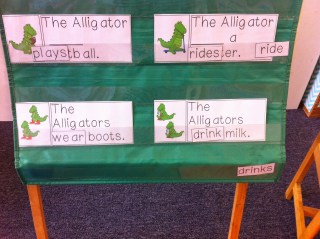
When we finished completing the pocket chart sentences, we headed back to our tables and did a “Do the Subject and Verb agree?” worksheet. (They were all laughing a little too hard when I read the sentences aloud that didn’t make sense).

 Teaching To The Test-Taker