
This year I have been working with students in the lower grades on foundational reading skills. With each student, I started with a Foundational Reading Skills Assessment to figure out the specific phonemic awareness skills that they needed to review as well as the letter sounds that they needed to work on and then designed an individualized intervention plan based on that data.

Now that most of my students have mastered the skills that I assessed them on at the beginning of the year, I have been focusing on teaching them more complex phonics elements. In each lesson, I introduce a new phonics element, have students listen for the sound and discriminate between words that contain the sounud and words that don’t, and then I have them work on reading AND writing words that contain that element.
I decided to teach phonics this way after taking OG training over the summer and reading the book Unlocking Literacy: Effective Decoding and Spelling Instruction. Both emphasize the importance of teaching decoding and encoding hand-in-hand so that students use multiple modalities (auditory, visual, kinesthetic).
In order to develop adequate decoding and spelling skills, children need explicit intruction in phonics that is systematic, structured, sequential, and multisensory.”
McIntyre & Pockering, 1995
I did a lot of research on best practices and the most effective sequence of instruction for decoding and encoding and decided to create my own set of teaching resources that are just that – explicit, systematic, structured, sequential, and multisensory.
Today I want to walk you through what one of my lessons looks like and share the resources that I use during instruction in case these might be useful for you and the students that you work with!
Part 1: Auditory Discrimination
In the next part of the lesson, I have students help me sort picture cards by the sounds that they contain. I share my screen with them, read each word pictured, and ask them whether it does or does not contain the feature that we are working on. In the example below, we were sorting based on whether the words began with /j/ sound.

This part of the lessons allows students to focus on the sound that we are working on before moving into the more complex work of matching the sound with symbol(s) and/or producing the alphabetic symbol(s) that create the sound. In doing so, students are using a second modality – auditory – which contributes to the multisensory approach of learning phonics.
Part 2: Explicit Teaching + Decoding Practice
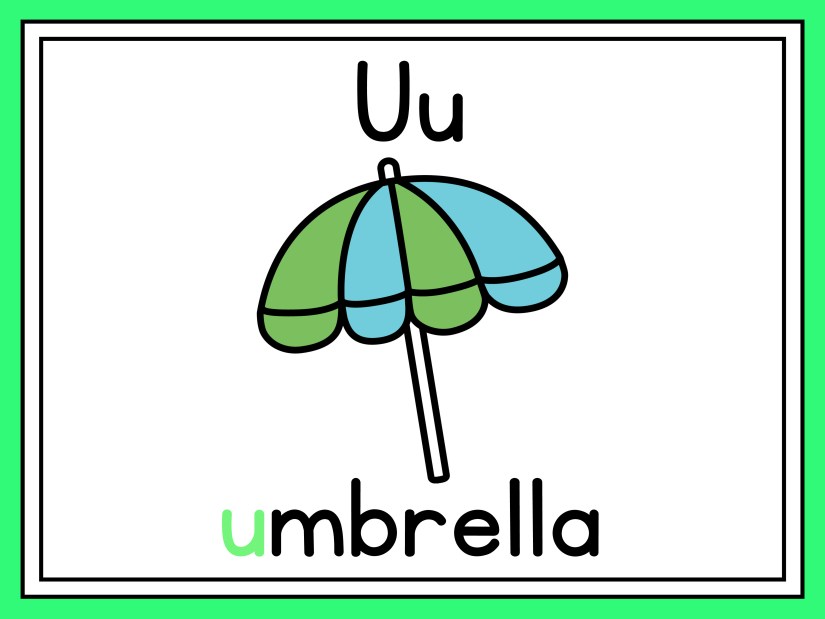
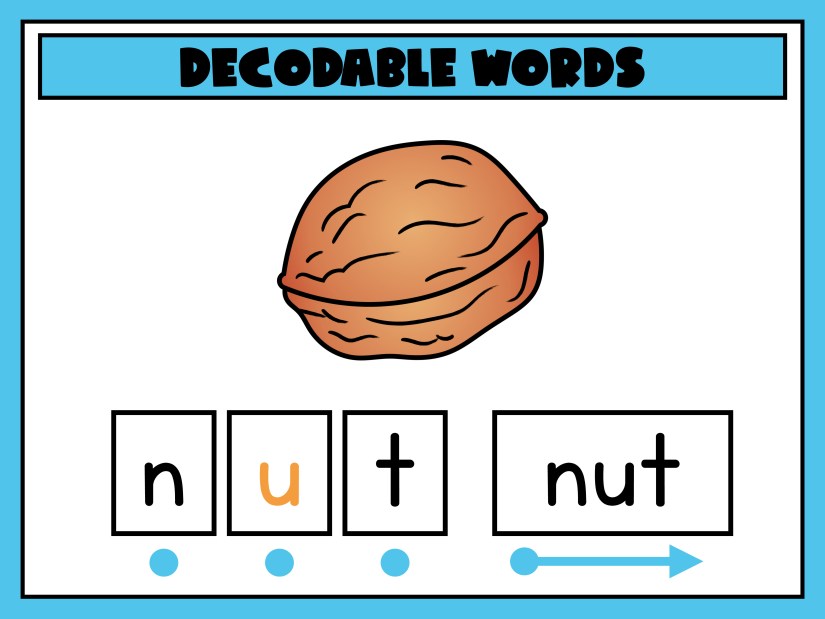
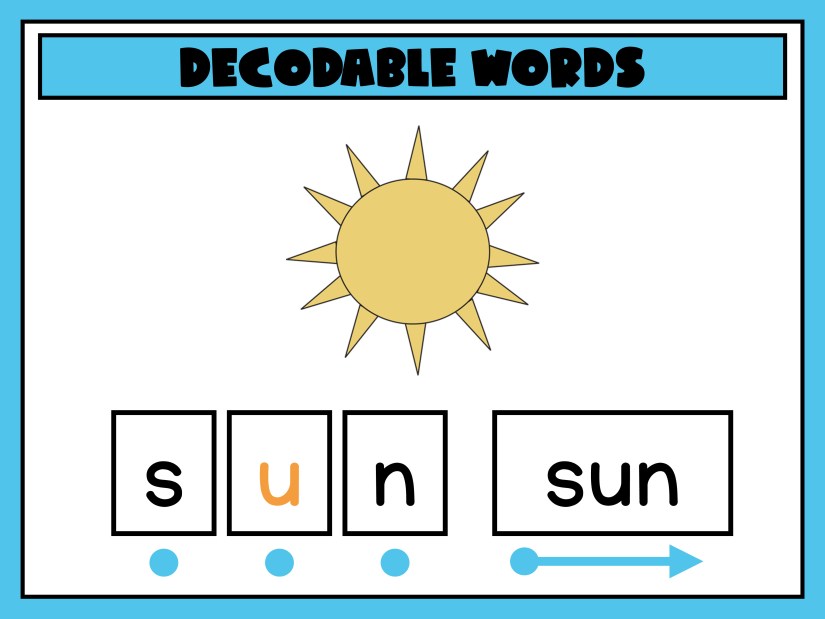
Once students have become familiar with the sound that we are learning, I explicitly teach the symbol(s) that create that sound and model decoding words that contain the sound/symbol. If you go through the slides below, you will see an example from a lesson on the short vowel u.
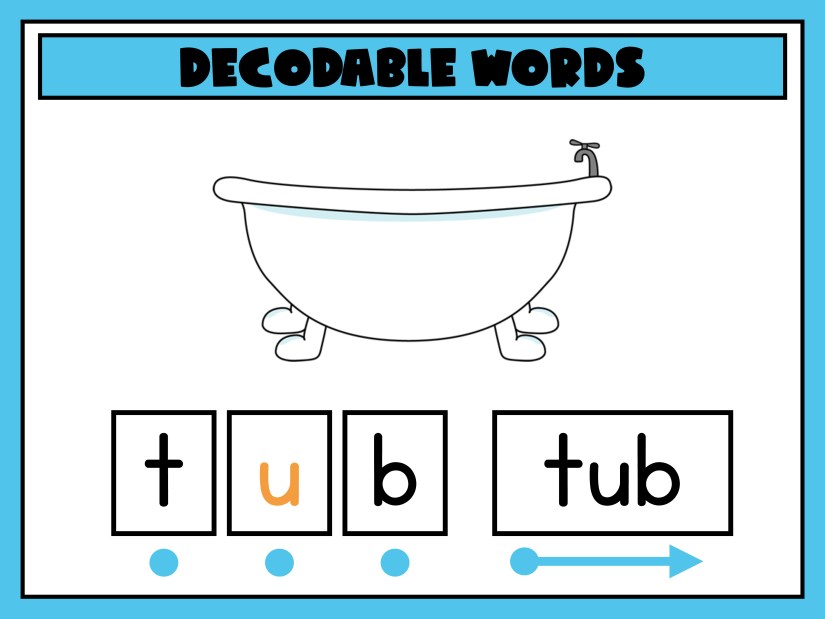
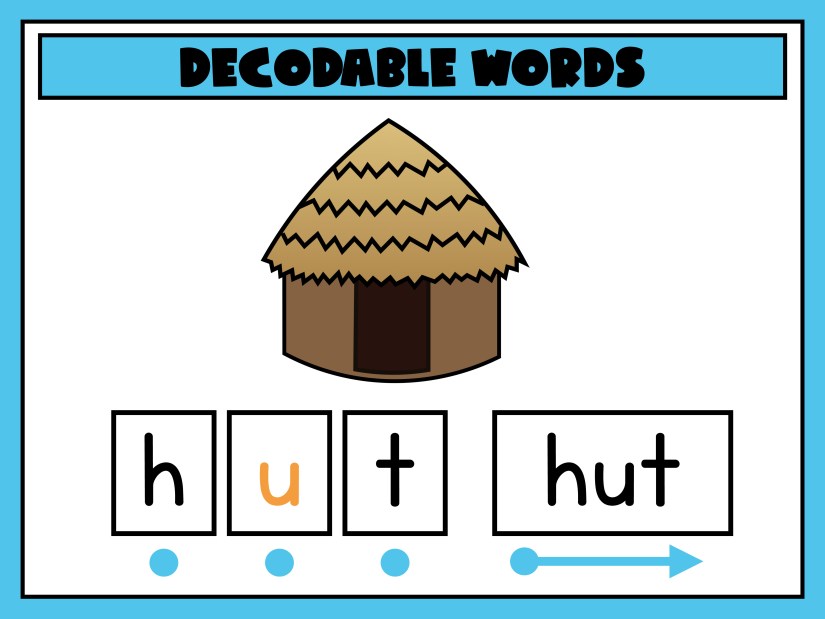

Part 4: Encoding Practice
Once students have decoded these words successfully, I have them work on encoding, or spelling/writing, the words. In this part of the lesson, students use a third modality, adding to the multisensory approach to instruction.
In the earlier lessons I do more explicit instruction. I say the word that I want them to spell (e.g. nut), ask the student to sound it out (/n/ /u/ /t/), and then walk them through spelling the word by repeating the sounds back to them one at a time and asking for the symbol that creates that sound (e.g. “which letter makes the sound /n/ at the beginning of ‘nut’? Which sound makes the sound /u/ in the middle of ‘nut’? Which sound makes the sound /t/ at the end of ‘nut’?).
In the later lessons, once I see that students have mastered spelling many CVC words, I provide less structured support and will, instead, say the word that I want them to write and observe as they walk through the steps of sounding it out and writing the symbols.
*I have been doing this instruction virtually this year, so I have students write on the whiteboard on Microsoft Teams, but they could also write on paper or on whiteboards at home or in class.
Part 5: Reading Decodable Texts
Many of the resources provided by my district are not sequential, in that, they suggest teaching a sound/symbol relationship and then provide a “decodable” text that contains many words with the focus phonics element, but also contain several words with features that students have not yet learned. (Example: in the decodable text for short a, we came across words with blends and digraphs and even some multisyllabic words that students did not yet have the skills to decode).
I found this to be really frustrating for my struggling readers and worried that it would hinder their progress and impact their confidence, so I decided to create my own decodable texts to go along with each phonics element. By teaching these lessons in the sequence that I have laid out, I can ensure that my students only encounter sight words that have already been taught and are only required to decode words containing sounds/symbols that they have already learned when they read new, decodable texts.
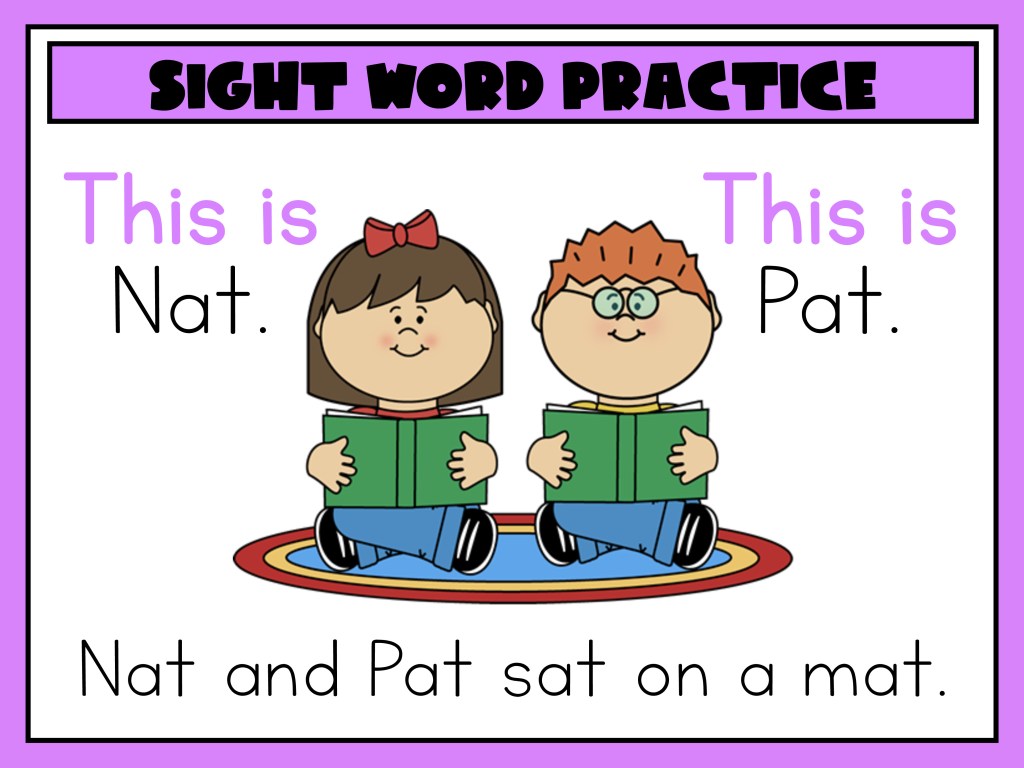
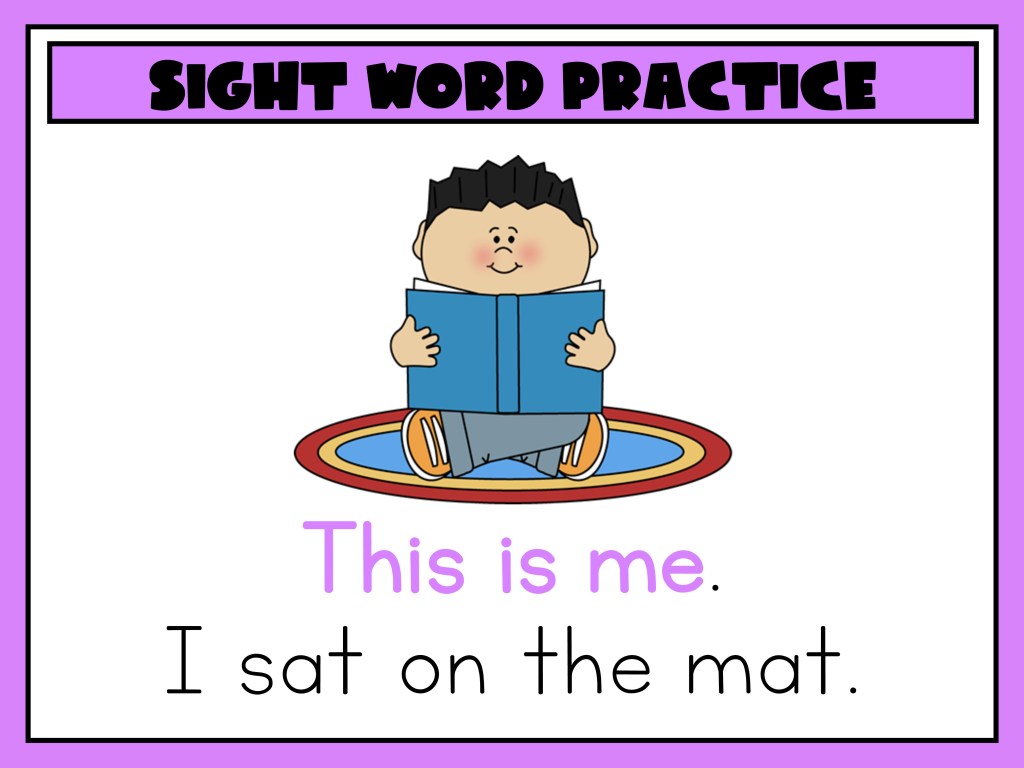
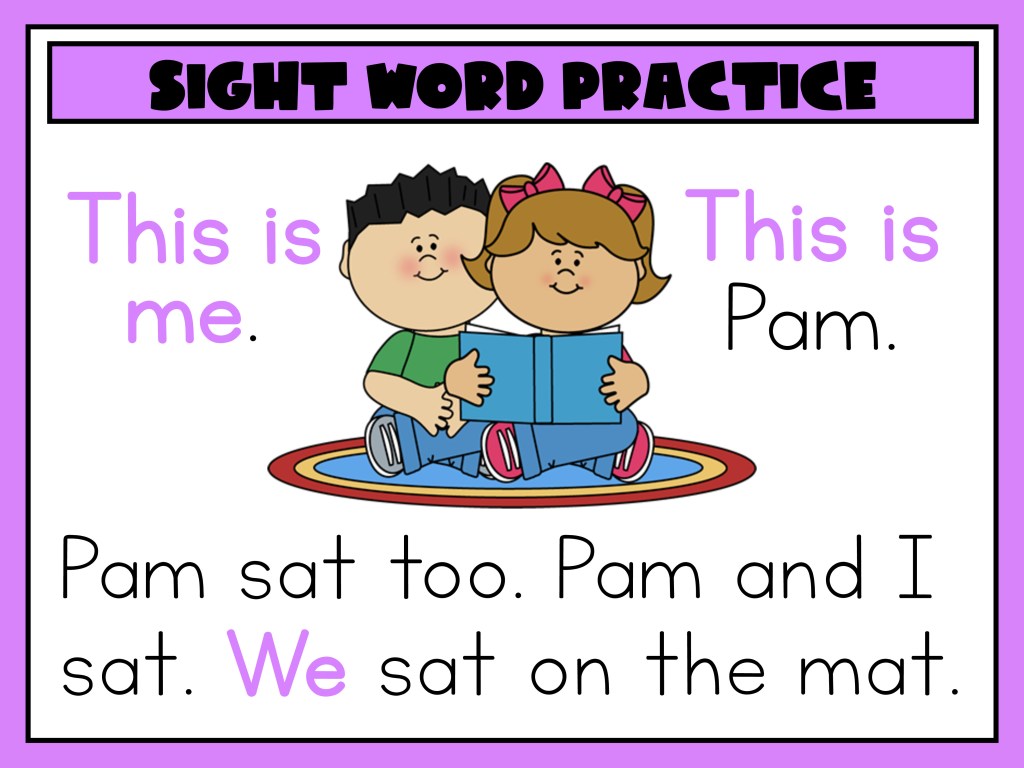
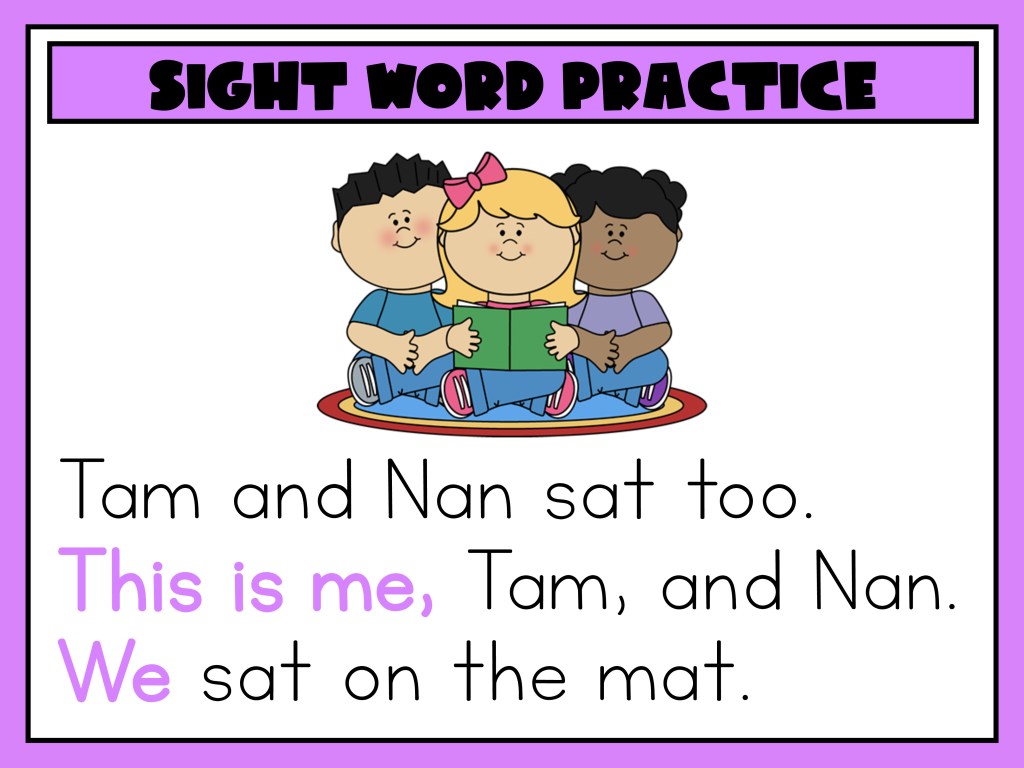
In this example, students were learning the sound of the consonant t and the sight words this, is, me, and we. They had already completed the lessons on the sounds of n, a, p, m, & s which covered the other sight words included in the passage (and, on, a, I, the too).
Part 6: Summary and Review
At the end of each lesson, we review the sounds, decodable words, and sight words that students have learned. These can also be used at the beginning of the next lesson if you prefer to start with review rather than ending the lesson this way.
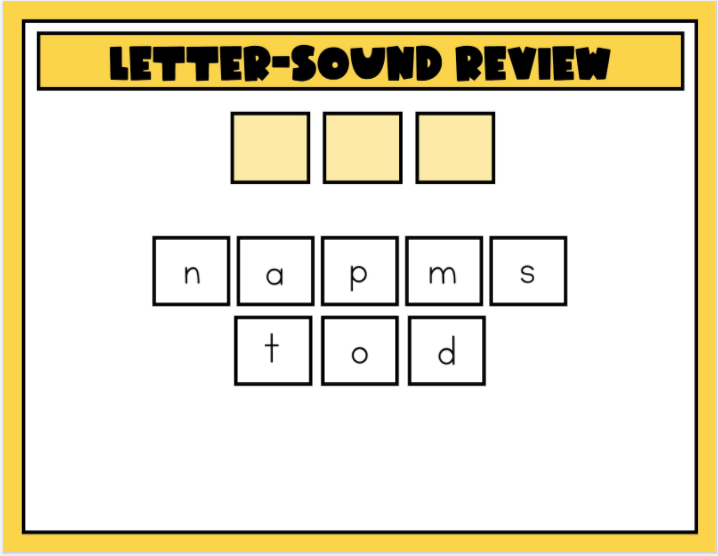
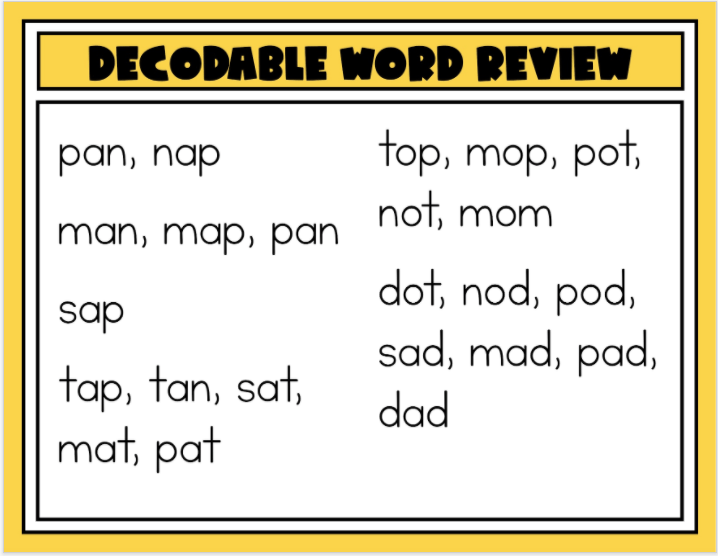
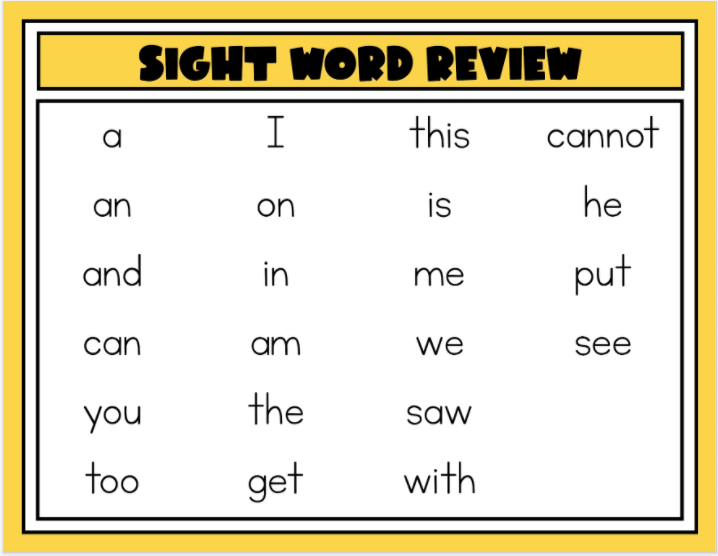
On the first review slide, I ask students to tell me the sound that each symbol produces. After that, we practice building as many words as possible containing the symbols available. Each lesson includes the same review slide templates with all of the sounds/symbols, decodable words, and sight words from previous lessons as well as the newly learned sounds and words.
If you are interested in purchasing these Digital Phonics Activities from my TeachersPayTeachers store, they are available as a bundle or for individual purchase! Click here for a Google Doc listing the order of the lessons as well as the sight words taught in each lesson (tip: if you purchase the bundle, you can link the lesson slides into the Google Doc so they are easy to locate and use in the correct order).
 Teaching To The Test-Taker