
This year I have been working with students in Kindergarten-3rd Grade and I was having a hard time getting organized and planned for my groups of students from four different grade levels because of the many different assessments that we use to determine who qualifies for “intensive intervention”. In my county, we give PALS which tests Kindergarten students on rhyming and beginning sound matching and 1st graders on segmenting and isolating phonemes, and we also give DIBELS which assesses K and 1st on segmenting. None of the assessments measure Phonemic Awareness in 2nd or 3rd grade, and I have been working with a few upper elementary students who needed some work in that area, so I used a Heggerty assessment at the beginning of the year, but then I had no tools for progress monitoring and no set benchmarks that students were supposed to reach by a certain point, so it was difficult to explain all of this to parents.
LONG story short, I did a lot of research on which skills students should master by what age and decided to create my own assessment, intervention resources, and progress monitoring tools to make my life easier, and I want to share them with you in case you are looking for an organized, sequential system that is easy to iplement and makes teaching and monitoring mastery of Phonemic Awareness fun and easy!
ASSESSMENT
At first I created an assessment without pictures, since Phonemic/Phonological Awareness activities are supposed to be able to be done “with your eyes closed” (I heard that at a training once), but when I gave it to a few of my Kindergartners (who I KNOW know how to rhyme), they got tripped up when they had to remember the three words that I said and repeat back to me the two that rhymed. So, I adapted the test to include visuals and gave it to a few of them again and it made a huge difference!

INTERVENTION RESOURCES
Once I figured out exactly which skills my students needed to work on, I started creating slides for our minilessons and practice worksheets for independent practice/progress monitoring. Because I work with students in Kindergarten who struggle with rhyming and that is one of the earliest phonological awareness skills, I decided to start there. I’m going to share all of my rhyming resources today and then I’ll cover other skills in a separate post in the near future.
Based on my research, rhyming is a skill that is typically expected to be mastered by age 5 (a.k.a. sometime in Kindergarten).
- Common Core standards for Foundational Reading Skills: CCSS.ELA-LITERACY.RF.K.2.A Recognize and produce rhyming words.
- VA SOL: Kindergarten Oral Language: K.4 b) Identify and produce words that rhyme).
The following subset of skills are usually taught and mastered in the order that they are listed below:
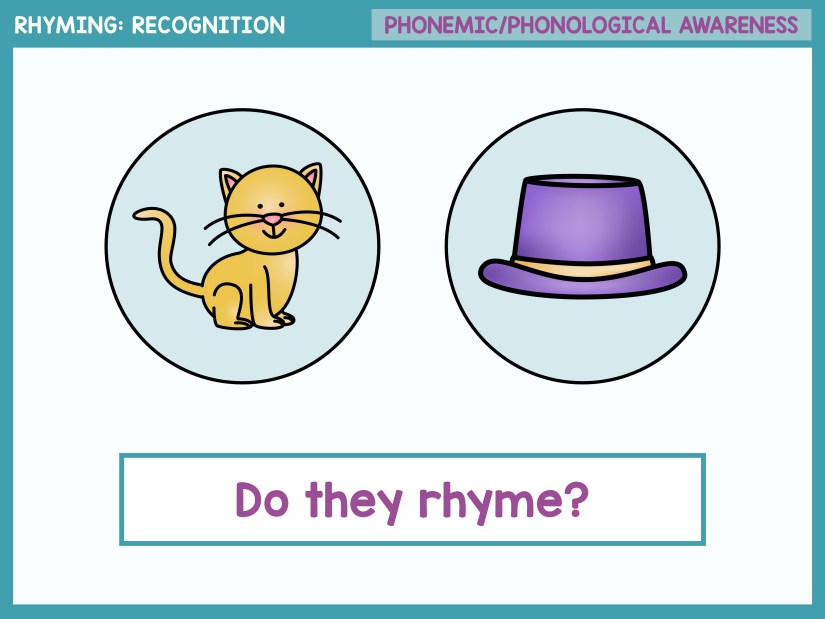
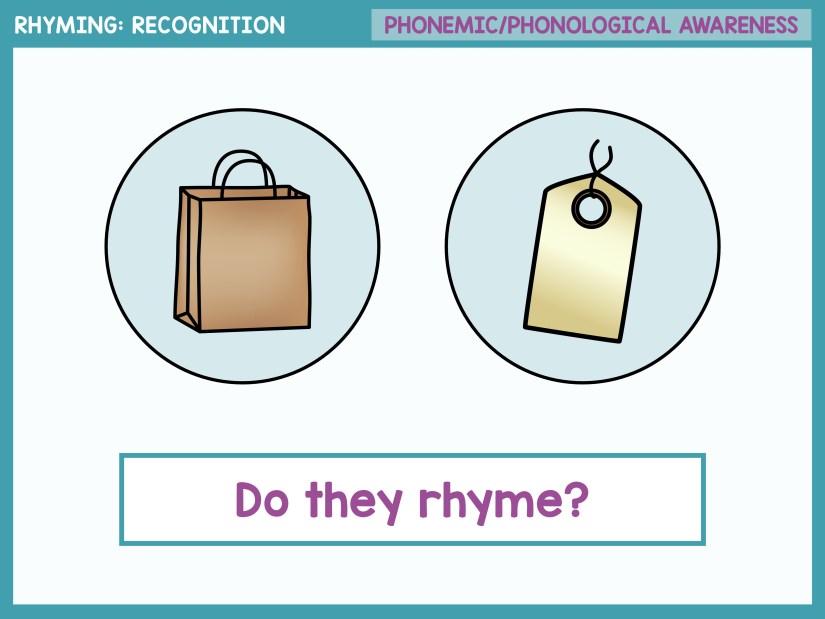
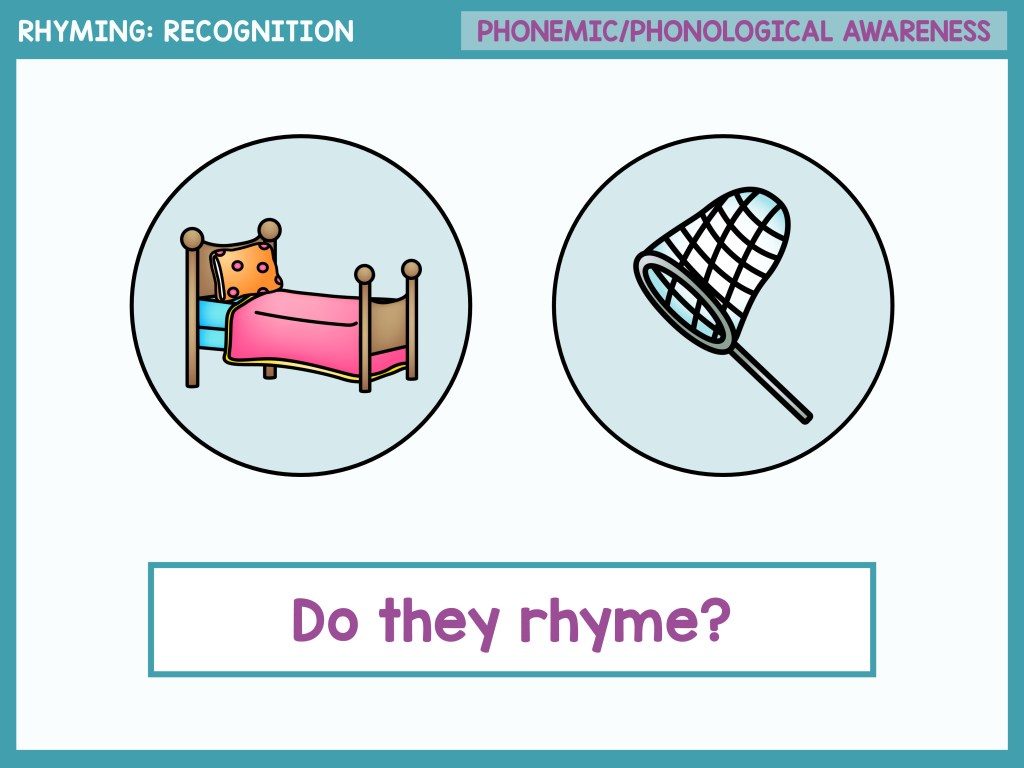
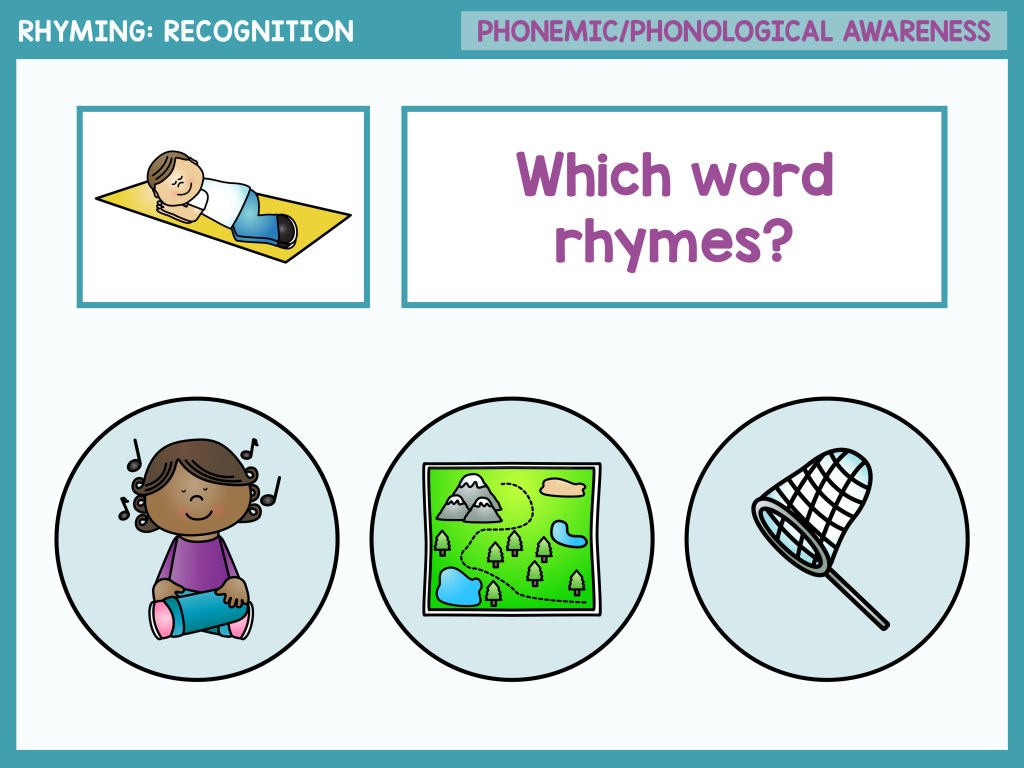
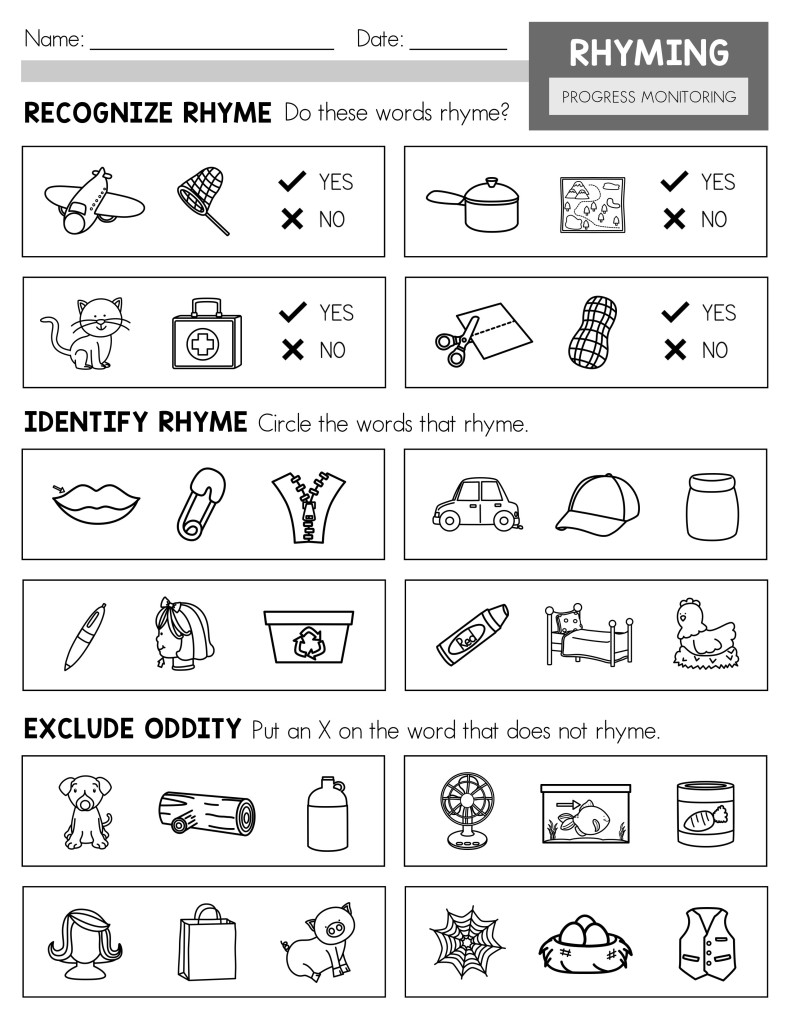
- Recognize Rhyme: Do these words rhyme?
- Identify Rhyme: Which two words rhyme?
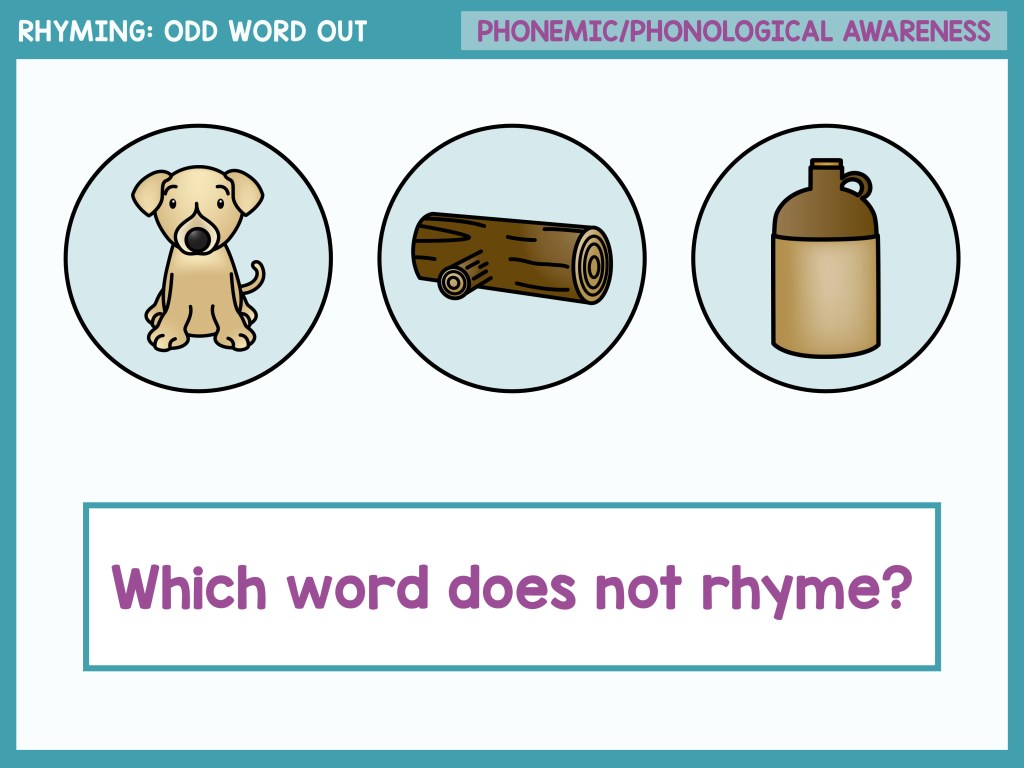
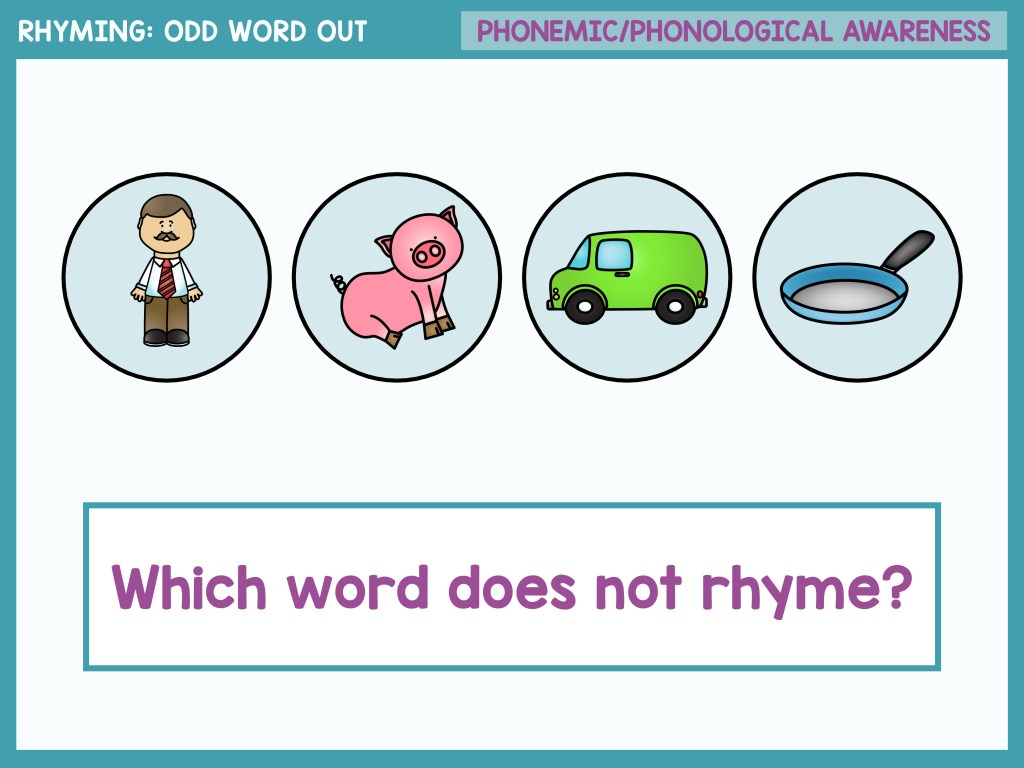
- Exclude Oddity: Which word does not rhyme?
- Produce Rhyme: What rhymes with a given word?
The lesson slides that I created cover skills 1-3 in a predictable progression that becomes increasingly challenging. Skill 4 can be done orally without any materials, so I didn’t create a lesson for that one. Below, you can check out a few of the slides from the first lesson on recognizing rhyme. (Not pictured: in the speaker notes I have listed the names of the items pictured and a script to explain why the words do or do not rhyme).


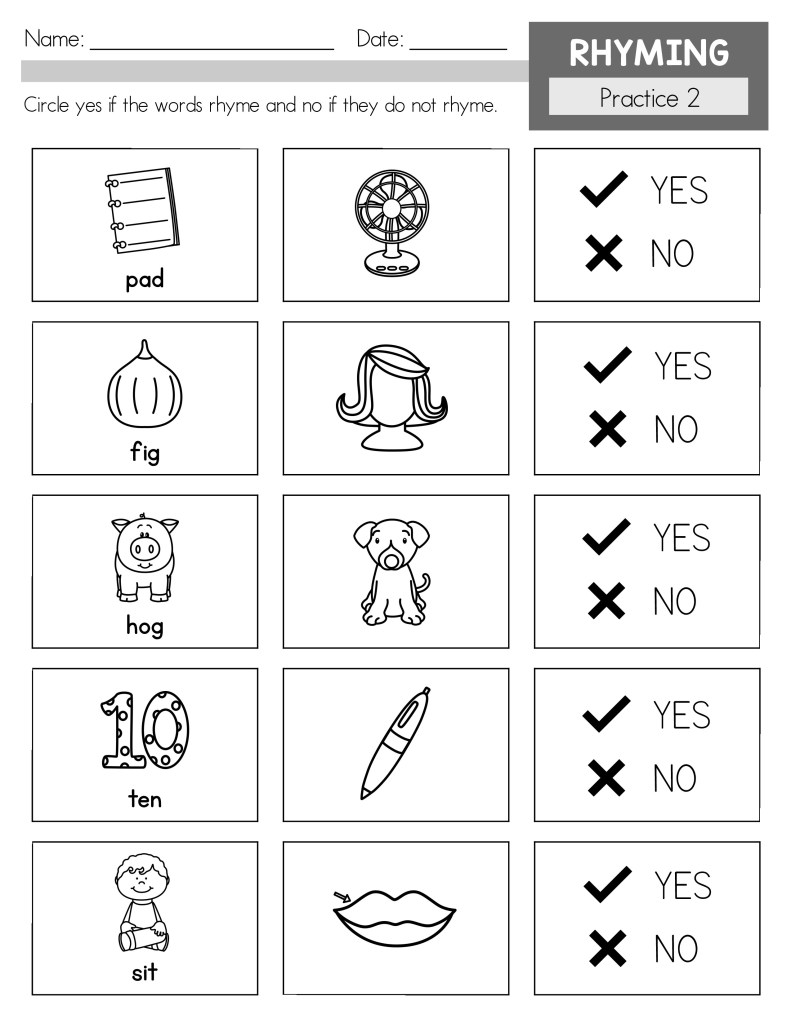
I also created three Rhyming Practuce Sheets for each subskill/set of slides. You can check out the sheets for the first lesson on rhyme recognition below.


In the pictures below, I’m including the lesson titles and sample slides for all of the other rhyming lessons, so you can preview what the rest of the intervention pack includes. All of the slides include speaker notes and are interactive – either a check mark or X pops up to confirm the answer, or the images disappear to leave only the correct answer.
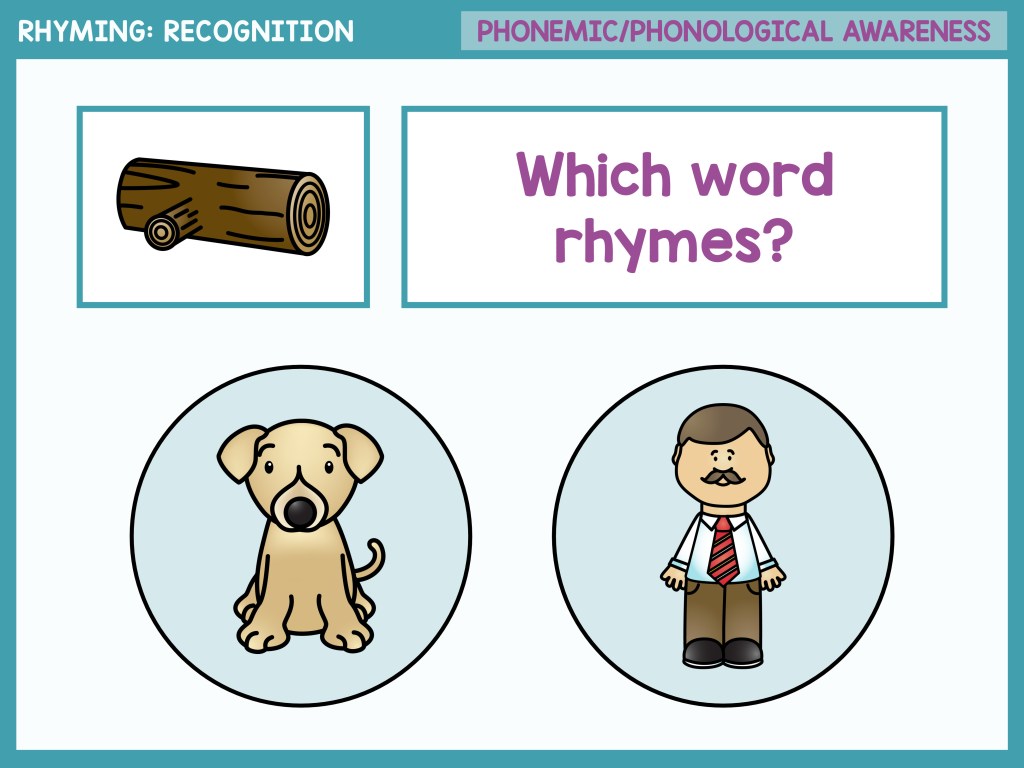

PROGRESS MONITORING
I use the worksheets for informal progress monitoring after each lesson, but I wanted a cumulative assessment that focused only on rhyming so I could make sure that my kids mastered all of the rhyming subskills before moving on to the next skill.
PURCHASE OPTIONS
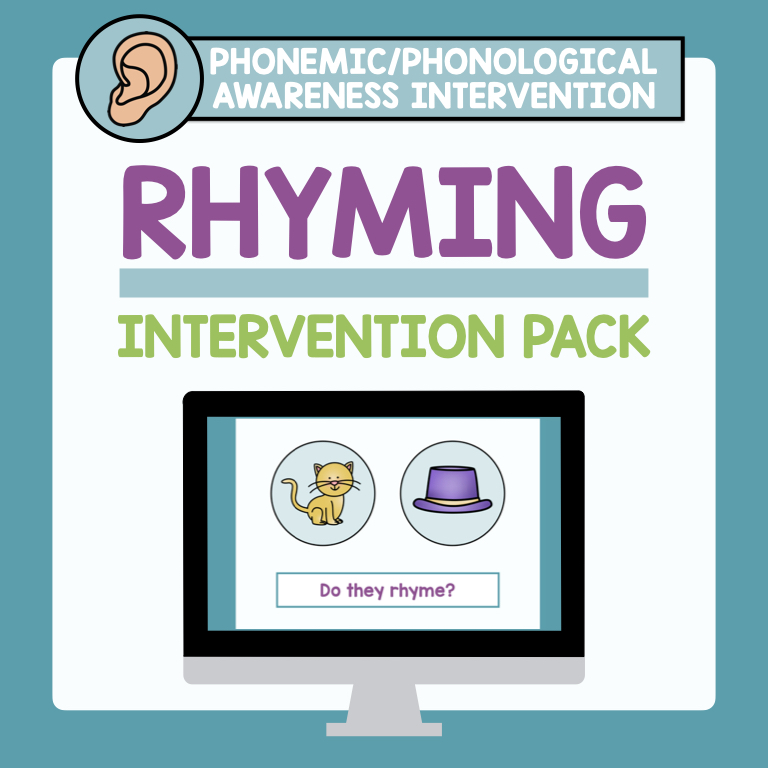
If you are interested in purchasing all of the lessons and worksheets that I described in this blog post, you can find my Rhyming Intervention Pack in my TPT store.
If you would like to purchase individual lessons, click on the lesson cover images below:

Students will determine whether two given words rhyme or not.
- 30 Practice Items
- In presentation mode, and X or check will appear to confirm the answer

Students will select a word that rhymes with a given word from a set of two options.
- 21 Practice Items
- On every other slide, the rhyming word will remain and the non-rhyming words will disappear to confirm the answer
Students will select a word that rhymes with a given word from a set of three options.
- 11 Practice Items
- On every other slide, the rhyming word will remain and the non-rhyming words will disappear to confirm the answer
Students will determine which word does not rhyme from a set of three words.
- 22 Practice Items
- On every other slide, the rhyming words will disappear and the oddity will remain to confirm the answer
Students will determine which word does not rhyme from a set of four words.
- 11 Practice Items
- In presentation mode, and X will appear to confirm the answer
If you would just like to purchase the printable practice sheets, click on the image below.

 Teaching To The Test-Taker